Point Of Sale POS Terminal

Point Of Sale POS Terminal

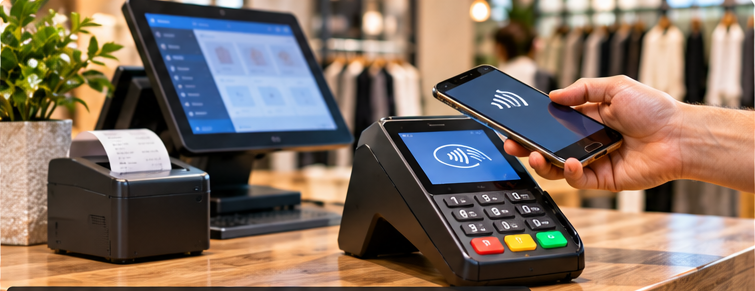
Modern POS payment terminals help businesses accept debit cards, credit cards, and contactless payments quickly and securely.

From countertop PIN pads and chip card readers to integrated payment terminals that connect directly with point-of-sale systems, today's payment equipment offers flexible options for retail stores, restaurants, cafés, and service businesses.

Whether you're opening a new business, replacing an outdated card terminal, or upgrading your existing checkout equipment, explore POS payment terminal solutions designed around your transaction volume, payment methods, and daily business requirements.

Get a Quote

What Is a POS Payment Terminal and How Does It Work?
A POS payment terminal is an electronic device that allows businesses to accept debit card, credit card, and contactless payments at checkout.

While payment terminals are often used alongside cash registers and point-of-sale systems, not every terminal works the same way.

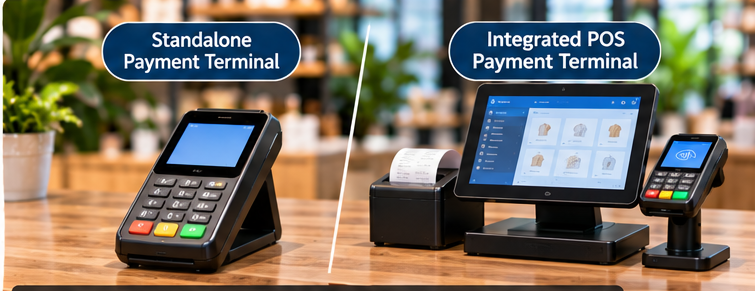
Standalone Payment Terminals: These devices operate independently from the business's cash register or POS software. Employees enter the transaction amount directly into the terminal, and the customer completes payment using a card or compatible mobile wallet.

Integrated POS Payment Terminals: These terminals connect with compatible POS software, allowing the checkout system to send transaction amounts directly to the payment device. This can reduce manual entry and help keep payment information aligned with sales records.

Countertop PIN Pads: Commonly used at retail checkout counters, these terminals may support chip-and-PIN, contactless, and other card payment methods.

Wireless Payment Terminals: Portable devices allow employees to accept payments away from a fixed checkout counter, depending on network connectivity and terminal capabilities.

Choosing between standalone and integrated payment terminals depends on your existing POS equipment, transaction volume, business environment, and preferred checkout process.

Choose a POS Payment Terminal That Fits Your Business

Different businesses need different payment terminal configurations. Choosing the right equipment means considering where customers pay, how transactions are processed, and whether your payment devices need to connect directly with an existing POS system.

Retail Stores: Countertop payment terminals and PIN pads provide a convenient way to accept debit cards, credit cards, and contactless payments at a fixed checkout counter.

Restaurants and Cafés: Portable wireless payment terminals can allow customers to pay at their tables, while countertop devices may be suitable for cafés and quick-service checkout counters.

Service Businesses: Salons, repair shops, and professional service providers may benefit from compact terminals that support straightforward card payment acceptance.

High-Volume Checkout Locations: Grocery stores and busy retail environments may benefit from integrated terminals that receive transaction amounts directly from compatible POS software.

Mobile and Flexible Checkout: Businesses that accept payments away from a traditional checkout counter may consider wireless or portable terminals with suitable connectivity.

Before choosing a payment terminal, consider transaction volume, supported payment methods, network connectivity, integration requirements, and the customer checkout experience.

Understanding POS Payment Terminal Technology and Security

Modern POS payment terminals use specialized technology to process electronic transactions and help protect sensitive payment information.

Understanding how these devices work can help businesses compare payment equipment and choose features suited to their checkout requirements.

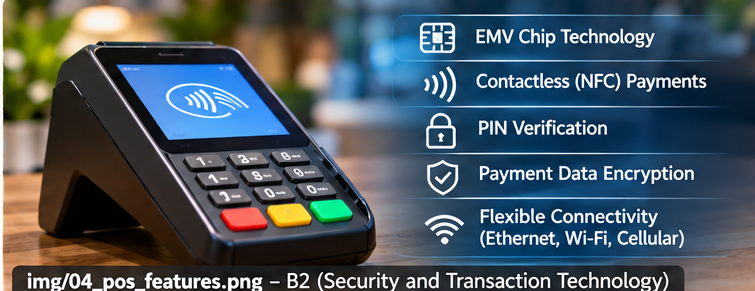
EMV Chip Technology: Compatible terminals read the embedded chip in debit and credit cards, using transaction-specific security data to help protect against certain types of card fraud.

Contactless NFC Payments: Near Field Communication (NFC) allows customers to tap compatible cards, smartphones, or wearable devices to complete eligible transactions.

PIN Verification: Chip-and-PIN transactions allow customers to verify their identity using a personal identification number when required.

Payment Data Encryption: Certified payment terminals use security mechanisms designed to protect sensitive payment information during transaction processing.

Terminal Connectivity: Depending on the model, terminals may connect through Ethernet, Wi-Fi, or cellular networks to communicate with payment processing services.

Integrated Transaction Processing: Compatible terminals can receive payment amounts directly from POS software, reducing manual entry and helping businesses reconcile checkout transactions.

When evaluating payment terminals, consider supported payment methods, security certifications, connectivity requirements, software compatibility, and the support available from your payment provider.

Understanding POS Payment Terminal Costs and Processing Fees

The cost of accepting debit and credit card payments involves more than purchasing a payment terminal. Businesses should consider equipment costs, transaction processing fees, monthly service charges, and the terms of their payment processing agreement.

Understanding these expenses can help you compare POS payment terminal solutions more effectively.

Terminal Purchase or Rental: Payment terminals may be purchased outright, rented, or provided under a service agreement. Each arrangement can have different upfront and ongoing costs.

Transaction Processing Fees: Payment providers may charge different rates depending on the type of card, transaction method, and processing agreement.

Monthly Service Charges: Some payment processing arrangements include recurring fees for terminal connectivity, account services, reporting, or other features.

Standalone vs. Integrated Equipment: Terminals that connect directly to POS software may require compatible hardware, integration services, or additional subscriptions.

Connectivity and Support: Wireless terminals may involve cellular data charges, while some providers charge separately for technical support or equipment replacement.

Contract Terms: Review agreement lengths, cancellation conditions, equipment return requirements, and any applicable early termination fees.

When comparing payment terminal options, consider your average transaction value, monthly processing volume, preferred payment methods, and total operating costs.

A solution with a lower upfront equipment price may not always offer the lowest overall cost for your business.

Ready to Find the Right POS Payment Terminal?

Whether you're opening a new business, replacing an outdated card reader, or looking for a payment terminal that integrates with your existing POS system, choosing the right equipment can help simplify everyday transactions.

Explore countertop PIN pads, standalone card terminals, integrated POS payment devices, and portable wireless terminals designed for different business environments.

Tell us about your business, the payment methods you want to accept, and whether you need a standalone or integrated terminal.

Submit your inquiry to explore available payment terminal solutions, equipment options, and payment processing arrangements suited to your business requirements.

Loading form…

Other Locations